What is Partial Discharge?
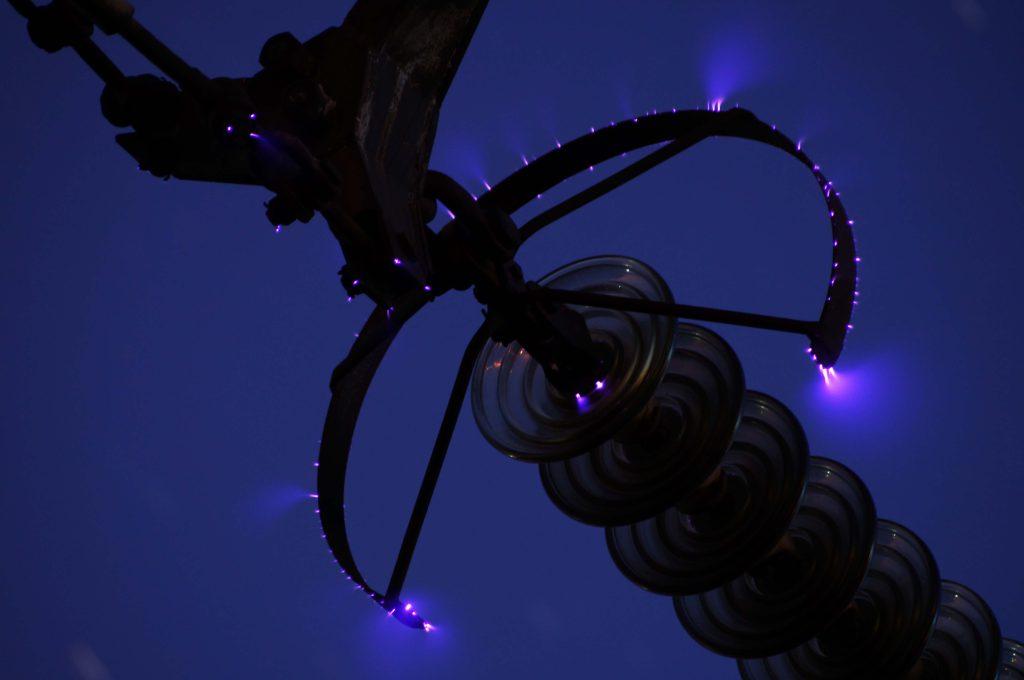
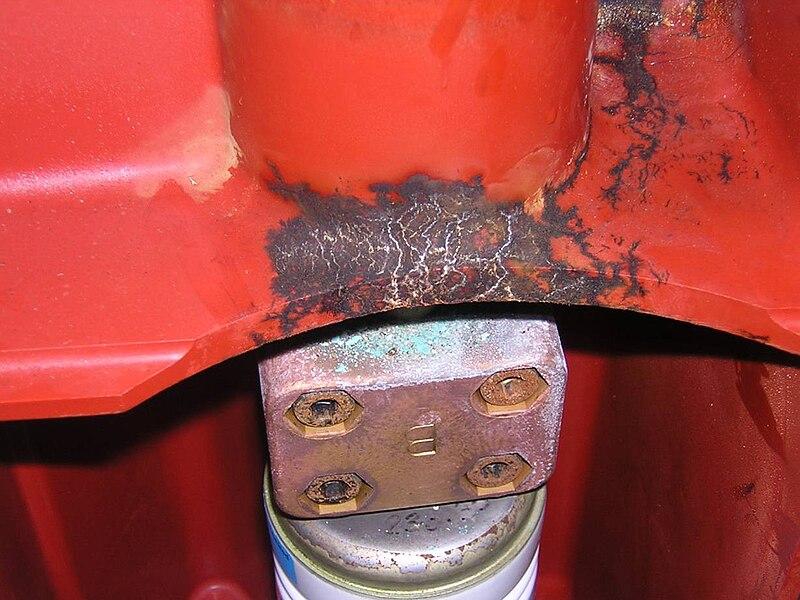
In the beginning The damage will be minimal. It does not have any impact on the electrical system, but when the damage gradually Accumulate and add more This will cause the insulation to be destroyed in a wide area and stretched out. At this stage it will begin to be detected and observed. From the generation of noise (Noise) that occurs all the time and the change in color of the surface due to the heat generated on some surfaces, leaving black or white traces. Until finally, when there is destruction of insulation that is long or wide enough and has a close distance to the ground or the part connected to the ground. There will eventually be a breakdown or short circuit from the high voltage terminal to the ground or the part connected to the ground. This allows the protection relay to detect abnormalities from short circuits to ground. and can order to release the circuit breaker
- Internal PD (Internal partial discharge) includes:
- Void in insulation Occurs within the insulation gap. This is because in the production process of rigid insulation An error may occur. Causing a hole in the insulation When used Therefore, there can be a discharge in the space in that area and it will gradually expand. Until it causes damage to the point where it cannot be used anymore.
- Sharp, Irregular surface on conductor Caused by the sharp, uneven surface of the conductor. This will cause the area to be sharp. or unevenly Electrical stress occurs. which causes partial discharge more easily
- Tree growth in insulation Electrical treeing growth often appears in solid insulators before insulation failure occurs. born in the shape of a black tree There may be an upward direction. or down below It depends on the electrical distance to the ground.
- External PD (external partial discharge)
- Floating metalwork near conductor Caused by installing metal near the conductor. This causes the electrical charge in the conductor to attempt to move into the grounded metal. Especially if there is a lot of humidity and dirt on the surface. It will increase the chance of a breakdown.
- Corona from sharp objects at high voltage Caused by high energy electrons Running away from areas of high electrical stress, such as sharp edges on electrical conductors or even electrical insulation When it collides with gas molecules in the air It causes disintegration and provides energy for disintegration. Some in the form of a purple glow. Some are sizzling, others are loud. The collided air molecules change from electrically neutral to polar and conductive. A trip of the system can occur if the Corona position has more space until a short circuit to ground occurs.
- Discharge from induced voltage onto sharp point at ground Caused by a discharge from the induced voltage to a sharp point on the ground. which if it is a high voltage electrical system There will be a wide range of electrical induction and if the distance between the conductor and the sharp point is less than the safe distance. Combined with humid air or rain, it will eventually cause discharge to the ground.
- Surface discharge Caused by the discharge of charge on the insulating surface. When the discharge moves along the surface of the insulator This is called surface discharge. It is one of the most damaging causes of PD. Dirtiness of the insulating surface and surrounding weather conditions They are two of the most common causes of surface discharge in medium and high voltage electrical equipment. This type of discharge Occurs when the insulation breaks. This is usually caused by high humidity or poor maintenance.
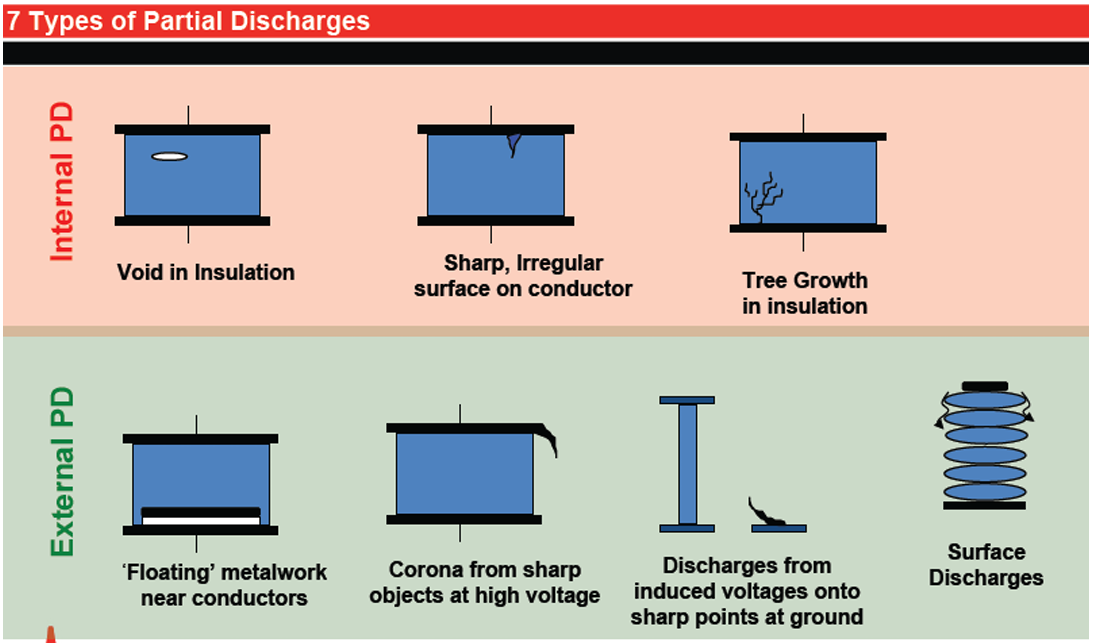
photo Types of PD [2]
Factors affecting the risk of Partial Discharge
- Lifespan of equipment: Electrical equipment that has a long service life There will be a greater probability of PD occurring because there is a greater chance of gaps or damaged equipment that can create suitable conditions for PD to occur.
- Design : The design of electrical equipment has a large impact on the risk of developing PD. Improper design or use of improper materials can make PD more likely.
- Production steps that lack quality: Impaired production This can cause gaps within the insulating surface, which gradually becomes a cumulative problem. Until it can be found in the PD measurement and when the damage traces expand and eventually break down.
- environment : High humidity environment or high temperature operation And there is a lot of dust. or thick dust particles Can result in more PD.
- lack of maintenance : Another main reason is lack of ongoing maintenance. or using a maintenance period that is too long This causes electrical equipment to accumulate a lot of dirt. coupled with not doing regular measurements or inspections
Measuring Partial Discharge [4]
When the insulation deteriorates There is accumulated dirt. or has a defect Will cause a partial discharge to occur. which if it is a discharge that can be observed Was able to check. But all this All types of discharge It cannot be completely observed with the eye. Therefore, the occurrence of PD should be measured by various methods. Each type of PD will cause some unique reactions or phenomena. Depends on the material of the insulation PD measurement is the detection of phenomena caused by PD. The measurement methods that experts in PD measurement recommend are as follows:
1. Electrical Charge
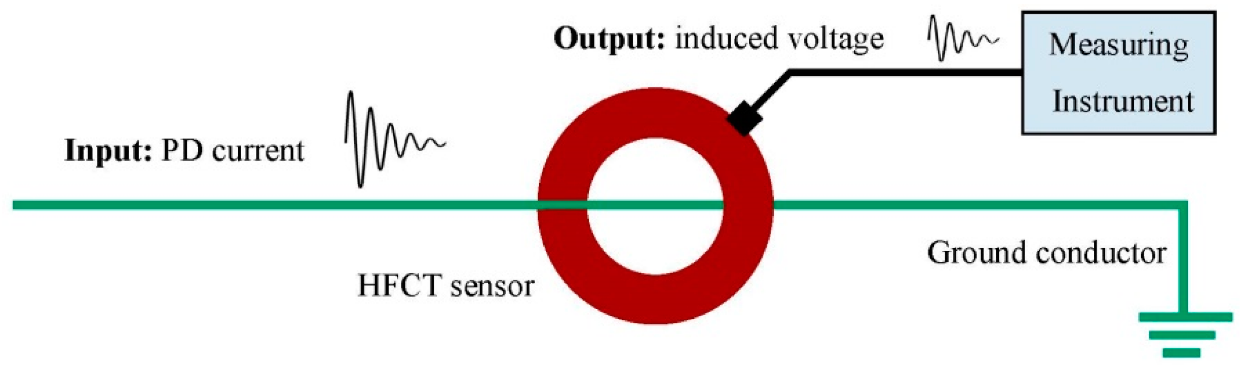
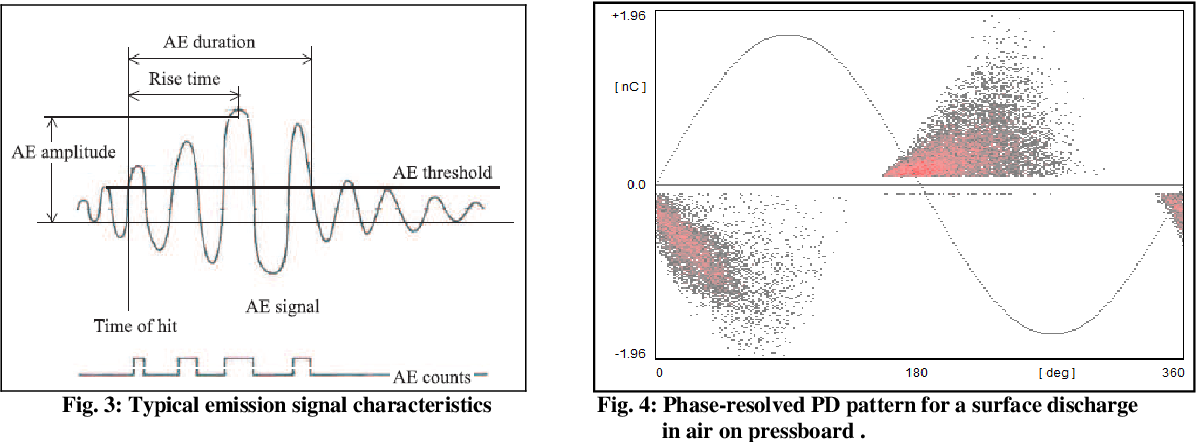
This is the electrical charge that comes from discharge (Discharge). Capacitor sensors or HFCT sensors can be used as the most popular techniques. Because it is a measurement of the charge resulting from a discharge, which provides many measurement data such as the size of the charge in units of coulombs (Coulomb) or mV, PRPD (Phase Resolved- PD pattern) is an indicator of the type of PD, PD Repetition or the number of times a discharge occurs, etc.
| Reaction of PD energy | Detection Sensor |
| Electrical Charge | HFCT(inductive), Coupling Capacitor |
| Acoustic | Airborne Acoustic (AA), Acoustic Emission (AE) |
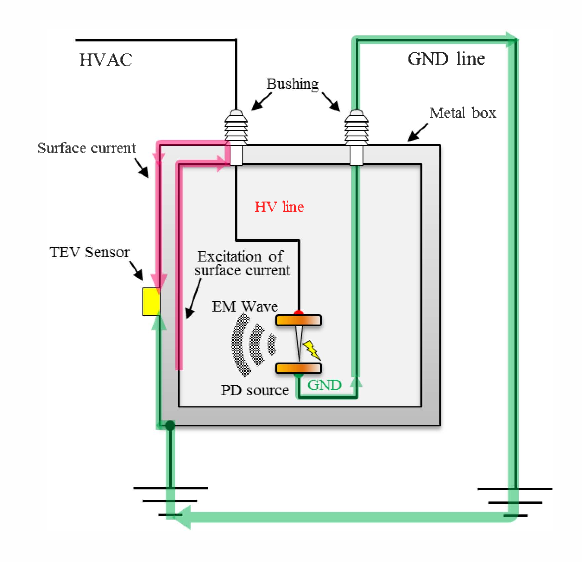
| Electromagnetic | TEV,VHF,UHF |
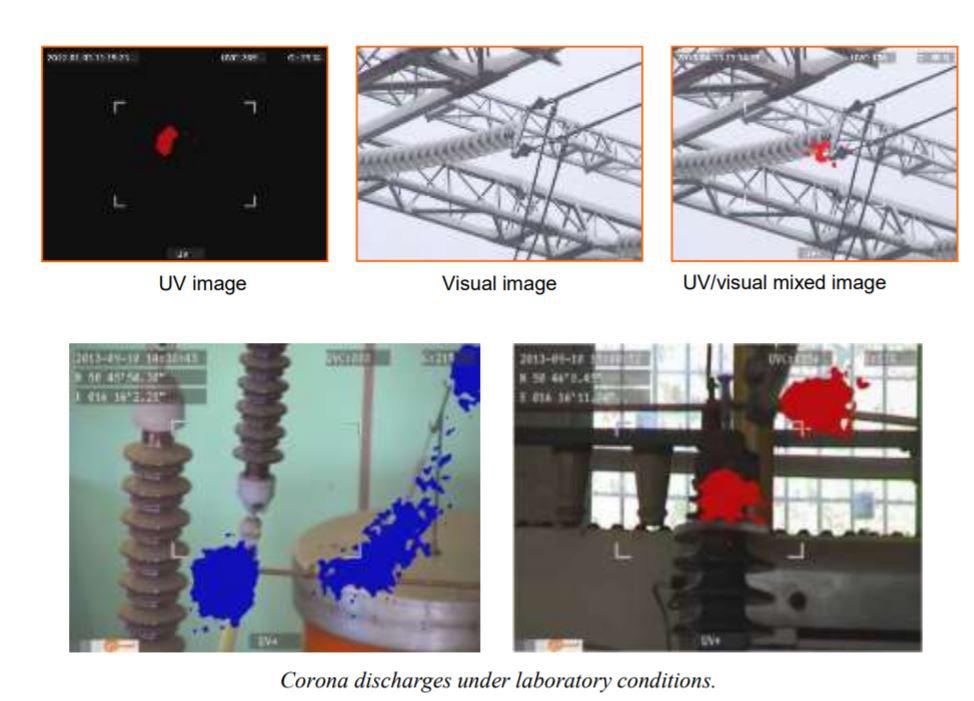
| Optical PD | Visible Detector |
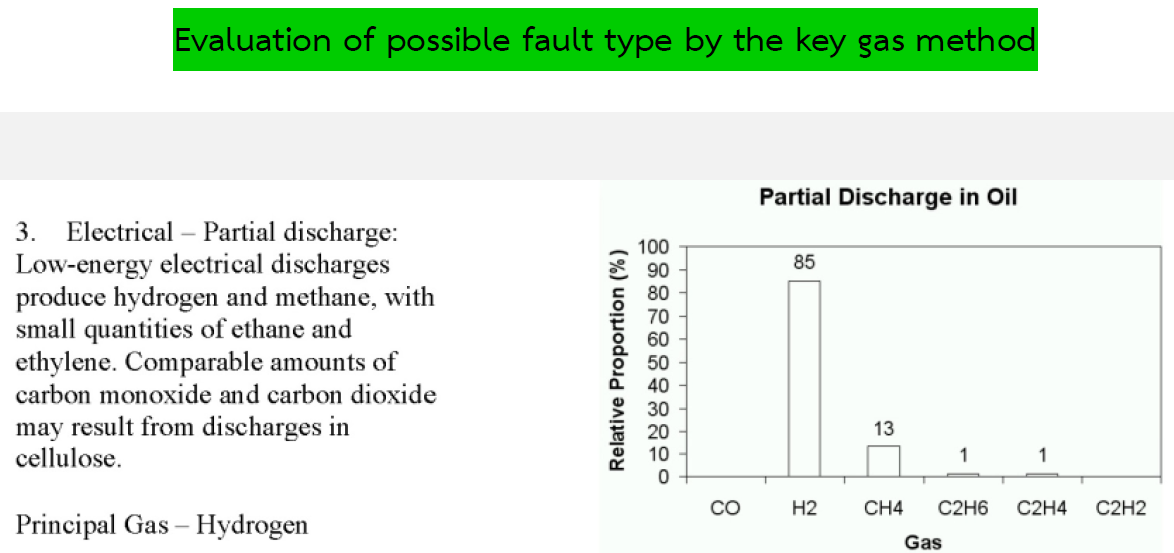
| Chemical | Dissolved Gas Analysis (DGA), Visual Inspection |
| Thermal | Thermal imager |
The best way to measure PD is to check everything and analyze all the data together. But in practice it is difficult. Due to the limitations of the measuring equipment and the limitations of each type of sensor, it is important to measure as many methods as possible. and understand the basics of its work Each type of sensor is used in order to use the sensor to suit the measuring device.
In addition to categorizing tools for PD measurement, inspection can also be divided into inspection while the fire is off (Online PD Measurement) and inspection while the fire is off (Offline PD Measurement).
- Non-power-off partial discharge test (Online PD Test) The online PD test is performed while the electrical equipment is running. Under the rated voltage of the device This will help to know the current insulation condition of the device. When receiving normal rated pressure This will be a non-destructive test. (Nondestructive test) and does not require voltage to be fed into the device to perform the test. This may have a negative effect on the device. Another advantage of online testing is that it is cheaper. Compared to offline testing
- Ultrasonic Method It is effective in detecting surface PD and corona PD. Sound emissions from PD reactions usually occur at frequencies too high for the human ear to hear, such as ultrasonic. As PD worsens, the sound frequency drops into the audible range. Airborne ultrasonics are the most sensitive method to detect airborne PD. Between the source and the detector Contact ultrasonic sensors can be used in chambers.
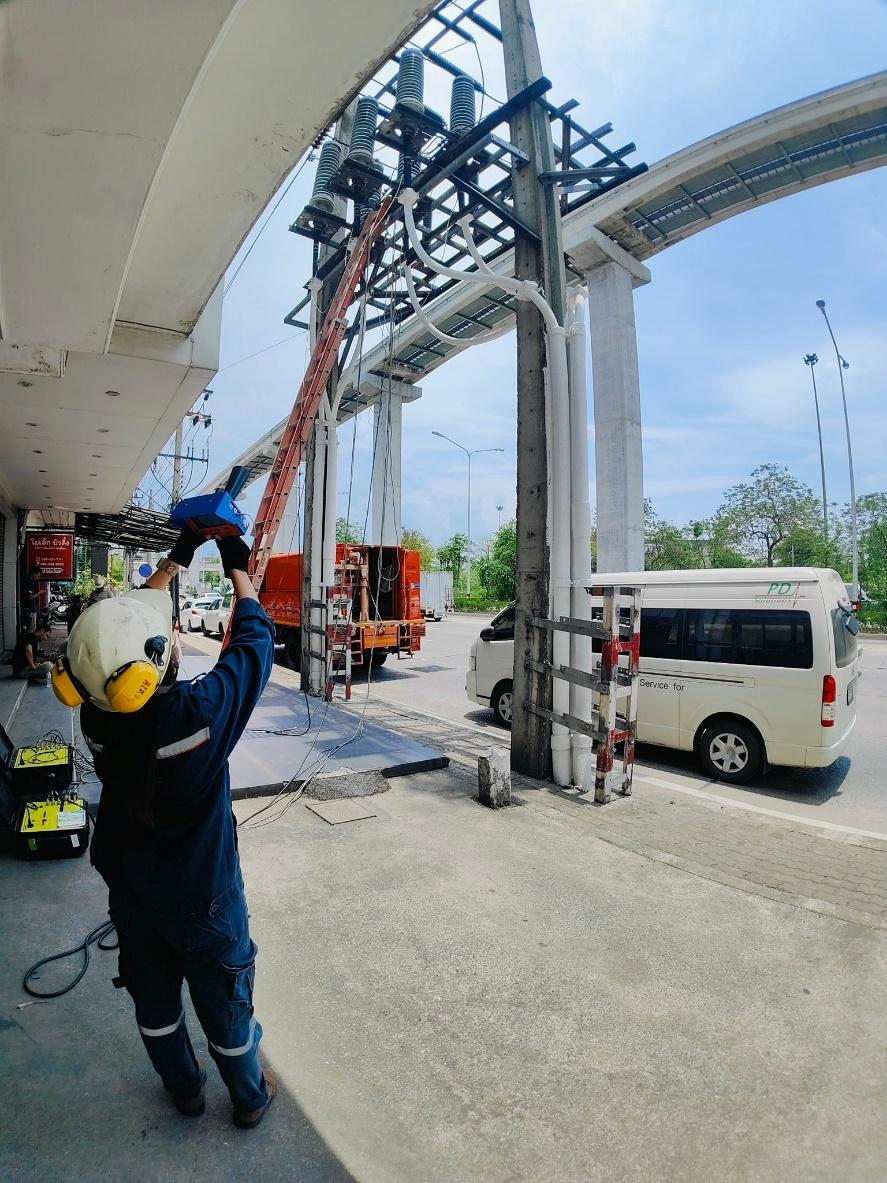
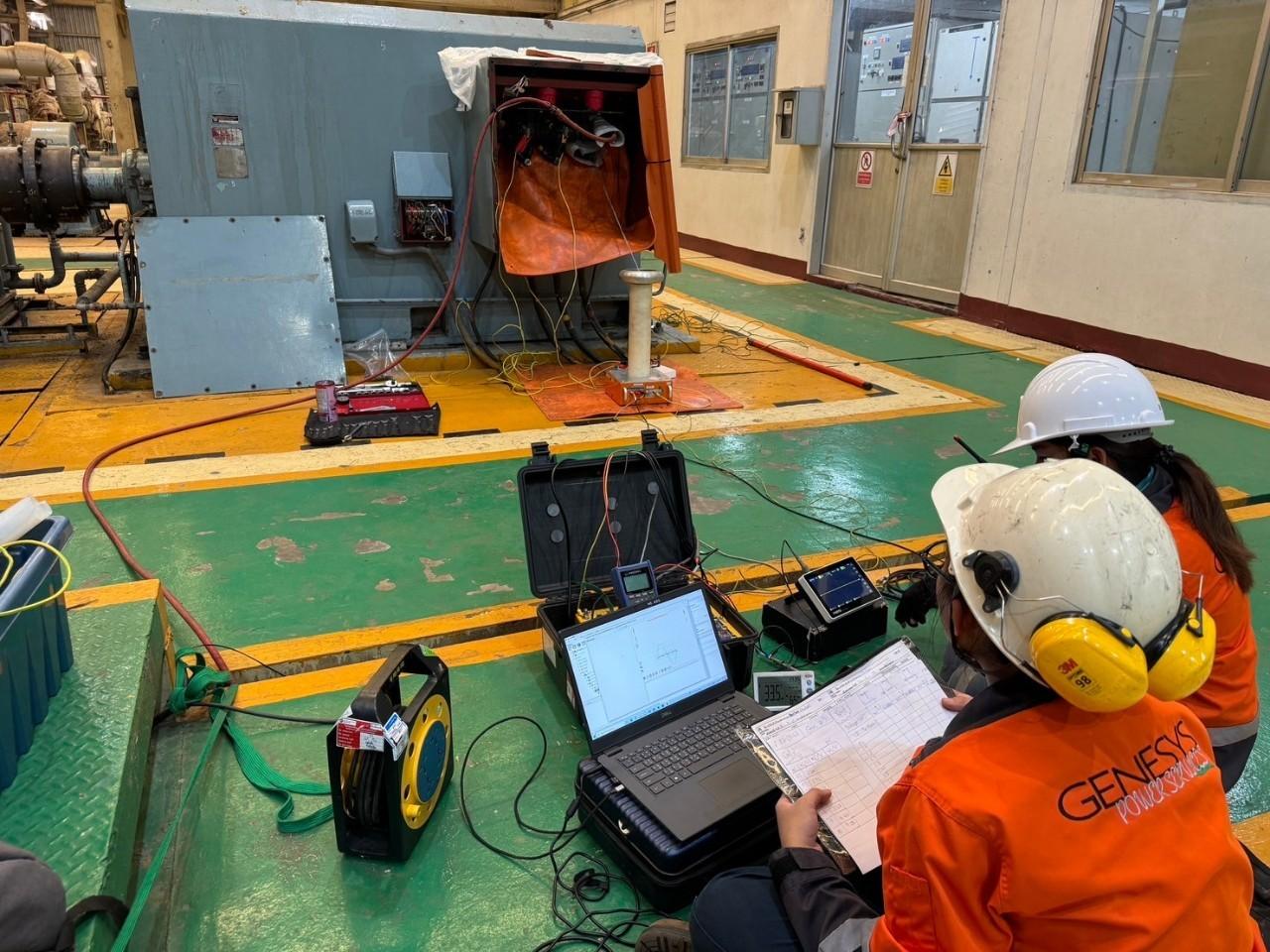
- Blackout Partial Discharge Test (Offline PD Test) According to the name of the test That is, it is a test in a condition where the electrical equipment does not receive voltage from the source. Or there is no work there. Instead, the test is performed by entering test pressure from a pressure generating device into the device. and measuring while applying pressure This type of testing has the advantage of being less noisy than online testing and can help to more accurately find potential future bugs. Helps plan for maintenance to prevent severe damage. But because the test voltage must be entered into the device to be tested. As a result, there must be an additional high pressure generator. This results in offline testing being more expensive. And testing is often combined with annual preventive maintenance.
- Tan-Delta Testing or Dissipation Factor is one of the non-destructive tests that are effective in diagnosis. Used to check the condition of extruded insulation. The capacitance and Tan-Delta values from the new insulation will be used as standard values. When comparing the capacitance and Tan-Delta values of the equipment's insulating materials with the standard values. This will make it possible to measure the deterioration of the insulation. and can predict the lifespan and plan maintenance and repairs before unexpected power outages occur. One key advantage of the Tan-Delta test is its ability to detect electrical treeing, which is a major cause of long-life insulation failure. The Tan-Delta test can be performed during the manufacturing process. The testing frequency depends on the rate of change of insulation quality. The occurrence of faults in the past, environmental conditions, etc. in areas with high humidity, high temperatures, and chemicals or pollution. More frequent testing may be needed.
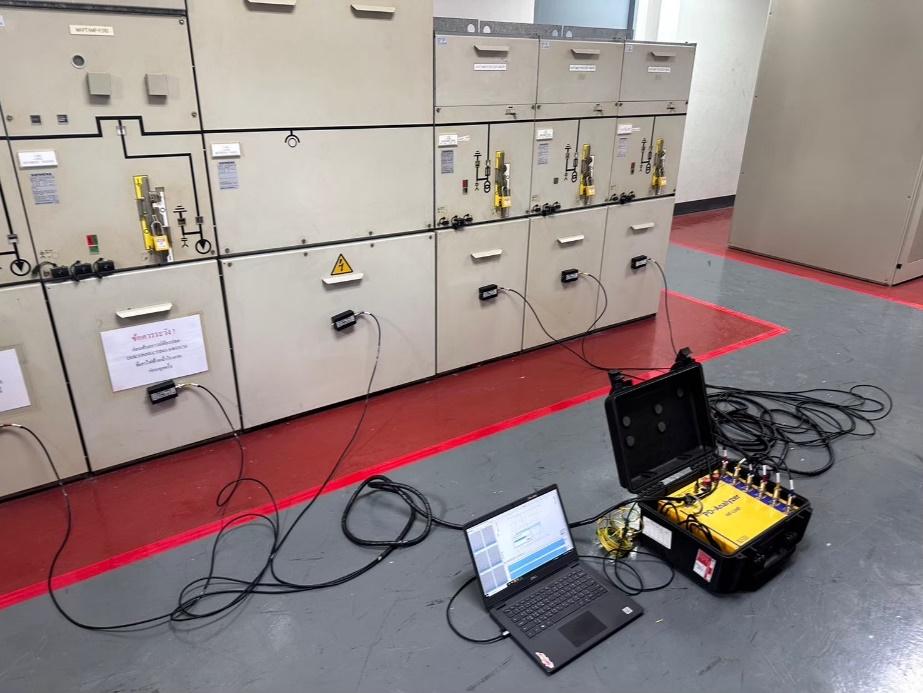
- Very Low Frequency (VLF) It is a test by entering alternating current voltage, high voltage, very low frequency (VLF AC Hi-Pot) into the equipment being tested. It was developed in the early 1980s as a replacement for the DC Hi-pot test. The DC Hi-pot test is not a field test method. acceptable for longer extruded cables This is due to the nature of the test which causes destruction of the insulation (Destructive Test) and cannot confirm the integrity of the insulation after the test. Although the Very Low Frequency (VLF AC Hi-Pot) test is used as a means of testing high voltage durability for cables, But it is also suitable for testing transformers, switchgear, rotating machines and other electrical equipment. It is often used as a voltage source for offline testing. The VLF high voltage test is a pass/fail test. and is not a diagnostic test. But it is one of the best ways to check insulation integrity. of electrical equipment to determine the results Whether you pass the test or not.
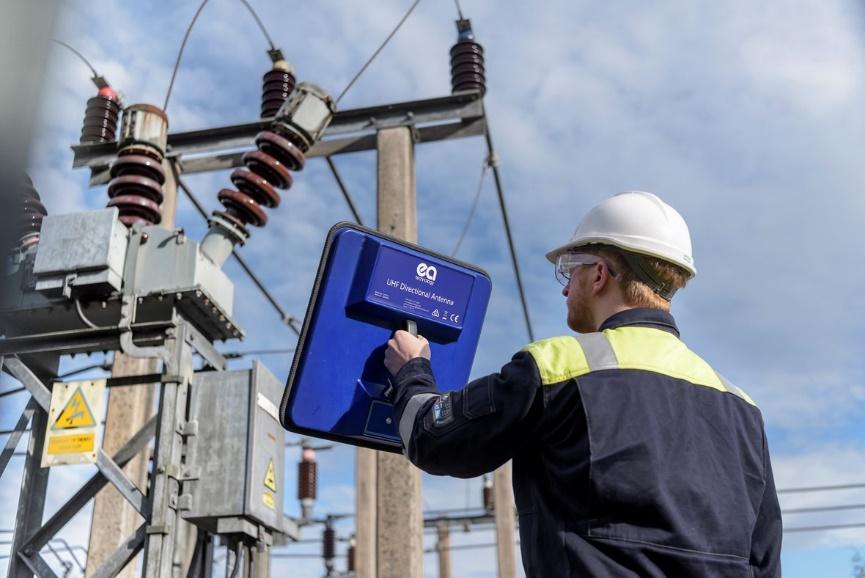
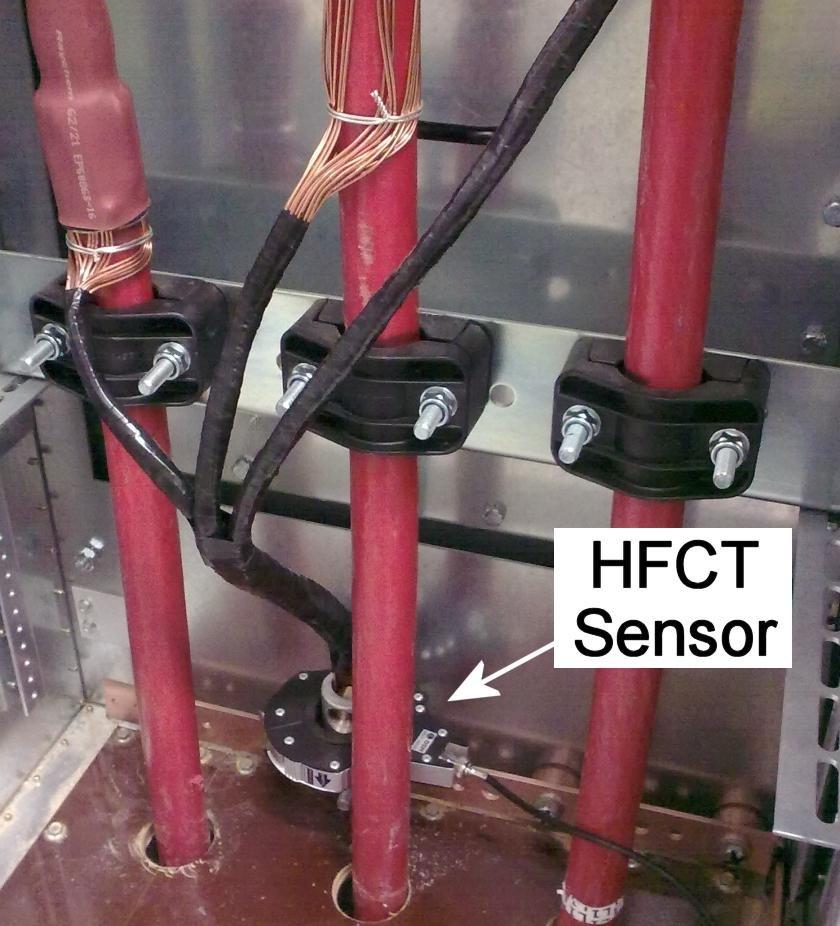
Comparing the results of each PD inspection provides the most reliable information for evaluating the insulation condition of electrical equipment. Any change in phase-resolved PD patterns or a sudden increase in amplitude is a sure sign that action must be taken to investigate, correct and prevent future spread.
Benefits received from measuring PD
- Helps measure insulation efficiency and evaluate the current condition of the insulation to make future plans
- Helps identify problem points in the system. This allows for accurate debugging.
- Helps electrical equipment and systems be reliable, stable, and efficient.
- Helps reduce the cost of urgent repairs. This is more expensive than preventive maintenance.
- Helps increase confidence and safety for users. Operators and assets
Line : https://line.me/ti/p/K4EaM7xLHq
number : 091-575-4250
Email : Marketing@genesys.co.th
Source: Genesys Power Services